Bride Lettering: A Designer’s Review for Craft Fairs
As an embroidery designer who has spent countless hours digitizing and testing patterns, I approach every new machine embroidery design with a critical eye. It is not just about how it looks on the screen; it is about how it performs in the real world. Recently, I evaluated Bride Lettering, a pattern intended for the wedding market. My goal was to determine if this specific embroidery file would hold its own on a busy craft fair table or in a curated online shop. For those of us running small businesses, the difference between a bestseller and dead stock often comes down to visual impact and production efficiency.
First Impressions: Balancing Casual and Elegant
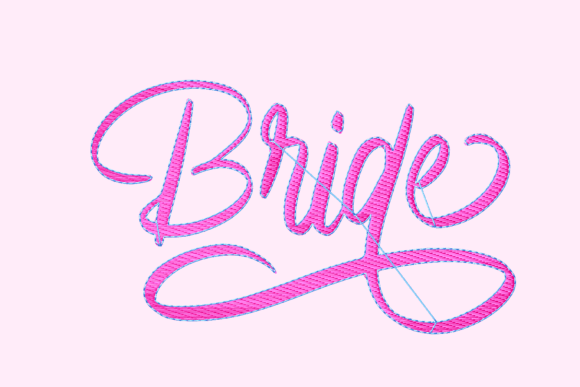
The first thing that strikes me about Bride Lettering is its tonal balance. The description claims it is both casual and elegant, which is a difficult tightrope to walk in design. Often, wedding-themed graphics lean too heavily into ornate script that feels dated, or they go so minimal that they lack personality. This design seems to hit a sweet spot. It feels modern enough for the contemporary bride who wants something chic but approachable. It does not scream "traditional" in a stiff way; instead, it offers a soft, decorative touch that fits well with current trends in handmade goods.
When I visualize this on a booth display, I look for immediate readability. At a craft fair, customers scan tables quickly. If they have to squint to understand the text, you lose the sale. Bride Lettering appears to have clear character shapes. This clarity is crucial for a craft fair product because it communicates the item's purpose instantly. Whether it is on a tote bag or a towel, the message is unmistakable. This instant recognition is vital for impulse buys, which make up a significant portion of weekend market revenue.
Product Applications and Visual Appeal
To truly test the versatility of this design, I mentally placed it on various substrates. The potential for tote bag design applications is high. A canvas tote with this lettering centered or offset slightly to the side creates a functional keepsake. Bridesmaids love items they can use again, and a sturdy bag with elegant lettering fits that bill perfectly. Similarly, apron embroidery is a growing niche. An apron with this design could serve as a fun getting-ready outfit for the bridal party or a unique gift from the maid of honor.
Kitchen textiles are another strong contender. Tea towel embroidery remains a staple for handmade sellers. Because towels are often white or light-colored, the contrast of the thread becomes a key selling point. However, one must be cautious with fabric texture. Terry cloth or waffle weave can distort fine details. If the design has intricate connections between letters, it might get lost in the loops of a thick towel. In such cases, using a cut-away stabilizer is non-negotiable to maintain shape and prevent puckering.
For smaller items, consider an embroidered patch. Patches are excellent for upselling at checkout. A customer buying a larger item might add a patch for a few dollars more. Bride Lettering could work here, provided the size is adjusted correctly. If the letters become too small, the stitches may merge, losing legibility. This is where checking the hoop size capabilities of your machine is essential. You need to ensure the design scales down without compromising the integrity of the letterforms.
Production Practicality for Small Shops
For any Etsy seller or boutique maker, time is money. A design that requires excessive trimming, frequent thread changes, or complex hooping is less desirable for batch production. Bride Lettering seems suited for efficient workflow. Assuming the digitizing is clean, it should run smoothly on standard home embroidery machines. The key is consistency. When producing a small shop product line, you want every unit to look identical. This requires strict attention to tension settings and fabric stabilization.
Photography is another critical factor. How does the design look in a printable mockup or a flat-lay photo? Simple, bold lettering tends to photograph better than overly complex motifs because it retains its shape even in thumbnail images on mobile devices. For online listings, clarity drives clicks. If you are selling the digital embroidery file itself, your preview images must show the design on multiple fabric colors to demonstrate versatility. Potential buyers need to see how the thread colors interact with different backgrounds.
Careful-Use Notes and Technical Considerations
While the design is versatile, there are pitfalls to avoid. Dense stitch areas can cause fabric distortion, especially on lighter materials like silk or thin cotton. If you are working with dark fabric, you must consider underlay stitches to prevent the background from showing through the top stitching. Additionally, curved surfaces like caps present a challenge. The design must be warped or adjusted to account for the curvature, otherwise, the lettering will appear distorted when viewed from the front.
Always test the design on scrap fabric before committing to a final finished product. Check the spacing between letters. If the kerning is too tight, the threads may bunch up. If it is too loose, the word may look disjointed. Confirm the commercial licensing terms before selling. Not all design assets allow for unlimited commercial use. Ensuring you have the right to sell items made with this commercial embroidery pattern protects your business from legal issues.
Enhancing Brand Consistency and Buyer Engagement
Incorporating Bride Lettering into your product line can strengthen your brand identity if you specialize in weddings or romantic gifts. Consistency in style helps customers recognize your work. If your booth features a cohesive look—perhaps using a specific palette of blush, ivory, and gold threads—this design fits seamlessly. It adds to the overall aesthetic appeal, making your display look professional and curated.
Buyer engagement increases when products feel personal and high-quality. Handmade items carry an emotional weight that mass-produced goods lack. By using a well-digitized pattern like this, you signal quality. Customers can see the precision in the stitches. This perceived value allows you to price your items appropriately. Do not undersell your work. The time spent hooping, stabilizing, and finishing each piece justifies a premium price point.
Ultimately, Bride Lettering is a strong candidate for wedding-themed collections. It balances elegance with accessibility. For the craft fair seller, it offers readability and speed. For the online seller, it offers photographic clarity and trend relevance. By paying attention to technical details like stabilizer choice and thread contrast, you can maximize the potential of this design. Whether you are creating tote bags, patches, or home decor, this pattern provides a solid foundation for profitable, beautiful handmade goods. Always verify the specific file details such as stitch count and format compatibility with your machine before beginning production to ensure a smooth creative process.