My 1st Reindeer Christmas: A Designer’s Review
As an embroidery designer who has spent countless hours behind the hoop and even more time standing behind a craft fair table, I know that not all designs are created equal. Some look fantastic on a screen but disappear in person. Others are so dense they pucker the fabric before you even finish stitching. Today, I am reviewing My 1st Reindeer Christmas, a machine embroidery design that promises to instantly transform any fabric into a festive beauty. I am evaluating this piece specifically for those of us who sell at weekend markets, run Etsy shops, or create handmade products for boutique clients.
First Impressions: The Mood and Market Fit
When I first loaded the embroidery file for My 1st Reindeer Christmas, my immediate impression was one of approachable charm. In the world of holiday decor, there is a fine line between elegant and cute. This design leans heavily into the "cute" and "festive" categories, which is a massive advantage for the general consumer market. It does not try to be overly complex or abstract. Instead, it offers a clear, recognizable subject that screams holiday cheer.
For craft fair sellers, clarity is king. When a customer walks past your booth, they have seconds to decide if your display catches their eye. A design with a strong silhouette and immediate emotional resonance, like a beloved reindeer character, works wonders. It feels soft, decorative, and inherently giftable. This is not a design for high-end minimalist interiors; it is a design for cozy homes, family gifts, and joyful celebrations. That specificity is actually a strength because it targets a very large demographic of buyers looking for warmth and tradition.
Product Applications: Where This Design Shines
The versatility of My 1st Reindeer Christmas is its strongest asset for a small shop product lineup. Based on the description, this machine embroidery is intended to stitch with care on your favorite items. Here is how I see it performing across different substrates:
- Tote Bag Design: This is perhaps the most lucrative application. A canvas tote with a centered reindeer motif is a staple craft fair product. The design likely has enough presence to stand out against the neutral background of natural cotton canvas, making it an easy impulse buy for shoppers carrying their own goods.
- Apron Embroidery: Holiday baking aprons are perennial bestsellers. Placing this design on the bib of a half-apron creates a focal point that is visible when worn. It adds a layer of handmade quality that mass-produced aprons simply cannot match.
- Tea Towel Embroidery: Kitchen textiles are low-cost entry points for customers. However, you must be cautious here. Tea towels often have a loose weave. Ensure the stitch density is appropriate so the design does not pull the fabric out of shape. If the design is too wide, it might distort the towel's hem.
- Embroidered Patch: If the design holds up at a smaller scale, turning it into an iron-on or sew-on patch is a brilliant move. Patches allow customers to customize their own jackets or bags, expanding your market without requiring you to stock finished garments.
- Pillow Covers and Pouches: For home decor, this design works well on square pillow covers or small zippered pouches. It acts as a seasonal accent that people can swap out after January, making the purchase feel less like a permanent commitment.
Production Practicality for the Busy Maker
From a production standpoint, we need to talk about efficiency. As an embroidery business owner, your profit margin is determined by how quickly you can produce a finished product without sacrificing quality. My 1st Reindeer Christmas appears to be designed for reliability. The description notes that you will love the result, which usually implies a well-digitized path with minimal jumps and tidy underlay.
However, you must verify the technical details before running a full batch. Check the stitch count and estimated run time. If this is a large design, it may take forty-five minutes or more per item. For a craft fair product, you want to balance visual impact with machine time. If the design is too dense, it will use excessive thread and time. If it is too sparse, it may look cheap on thicker fabrics.
Another critical factor is repeatability. Can you hoop multiple items quickly? Does the design require special positioning? A centered chest logo on a tee or a centered panel on a tote is easy to replicate. Complex, off-center placements slow down your workflow. Assess whether My 1st Reindeer Christmas allows for quick hooping and consistent placement.
Careful-Use Notes and Technical Considerations
While the design is lovely, there are potential pitfalls you must navigate to ensure professional results. Here are my top recommendations for testing this digital embroidery file:
- Fabric Texture and Stability: The description mentions transforming any fabric, but be skeptical of textured materials. Waffle-weave towels or thick terry cloth can swallow small details. Always test on the exact fabric you intend to sell. Use a cut-away stabilizer for stretchy knits and a tear-away for stable wovens to maintain the integrity of the stitch density.
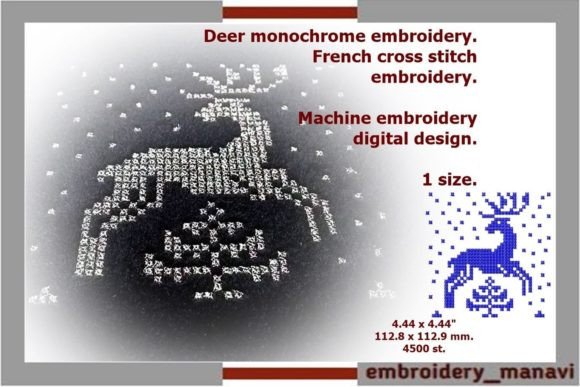
- Thread Colors and Contrast: Reindeer designs often rely on browns, reds, and whites. On dark fabric, ensure you have enough light-colored stitching to make the design pop. If the design lacks sufficient contrast, it will look muddy from a distance. Create a printable mockup or a physical sample on both light and dark fabrics to check visibility.
- Curved Surfaces: If you plan to put this on caps, remember that curved surfaces distort designs. You may need to resize the embroidery file or adjust the pull compensation. A design that looks perfect flat might look stretched or compressed on a baseball cap.
- Small Lettering and Details: If My 1st Reindeer Christmas includes text, inspect it closely at actual size. Tiny lettering can become illegible if the stitches merge. If the text is part of the design, ensure it is large enough to be read from three feet away.
Boosting Visual Appeal and Buyer Engagement
Ultimately, the success of this design depends on how you present it. For an Etsy seller, your photos are everything. Use the design to create lifestyle shots that evoke emotion. Show the embroidered apron being worn while mixing cookie dough. Show the tote bag filled with holiday gifts. These contextual clues help the buyer visualize the product in their own life.
In a physical booth, use My 1st Reindeer Christmas as a anchor piece. Place it on a high-visibility item at eye level. The festive nature of the reindeer draws attention, which then leads customers to browse your other items. It serves as a hook. Ensure your brand consistency is maintained by using complementary thread colors across your product line. If you use a specific shade of crimson for the reindeer’s nose or scarf, carry that color through to other items in your display.
Before you commit to commercial embroidery production, confirm the licensing terms. Most designers allow you to sell finished physical products, but you must verify this in the download package. Never assume. Once confirmed, treat this design as a key asset in your holiday collection. Test it on scrap fabric, refine your stabilizer choice, and watch how it transforms simple textiles into desirable handmade products. With careful execution, My 1st Reindeer Christmas can be a standout performer in your seasonal lineup.