Reviewing Christmas Card for Small Business Merch
As an embroidery designer who has spent years digitizing and testing files for commercial use, I approach every new machine embroidery design with a critical eye. It is not just about whether the design looks pretty on a screen; it is about how it performs in the real world of small business merchandise. Today, I am reviewing Christmas Card, a festive design intended for holiday-themed applications. For boutique owners, Etsy sellers, and apparel decorators, understanding the practical application of this file is crucial before adding it to your product lineup.
First Impressions: Visual Personality and Brand Fit
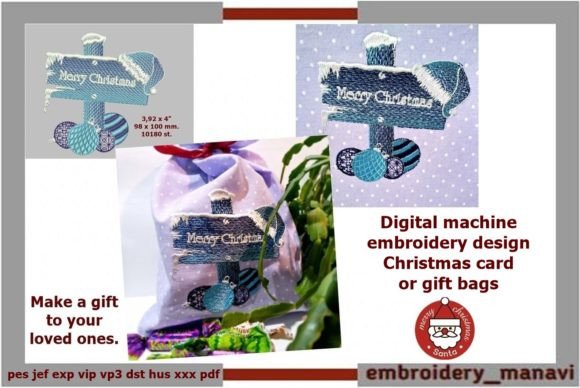
The initial appeal of Christmas Card lies in its versatility. Based on the description, this is an In The Hoop (ITH) design meant for decor on gift bags, napkins, T-shirts, and various accessories. Visually, the concept suggests a blend of traditional holiday warmth with a handmade aesthetic. For a brand, this translates to a "friendly" and "approachable" vibe. It does not scream corporate rigidity; instead, it invites connection. This makes it an excellent candidate for businesses that rely on personal touch, such as local bakeries, florists, pet brands, or creative studios looking to enhance their seasonal offerings.
However, "festive" can sometimes mean "cluttered." My primary concern with any holiday-themed embroidery file is clarity. Does the design hold its shape when scaled down? Does it look professional, or does it look like a last-minute addition? From a branding perspective, Christmas Card needs to align with your existing visual identity. If your brand is minimalist and modern, you must ensure the decorative elements of this design do not clash with your clean lines. If your brand is rustic or cozy, this design likely integrates seamlessly.
Real-World Applications for Small Business Merch
The true value of Christmas Card emerges when we move beyond digital mockups and consider physical production. Here is how I envision this design performing across different merchandise categories:
- Embroidered Patches: Creating custom patches is a huge trend for small businesses. An ITH design can be adapted into a standalone patch that customers can iron or sew onto jackets and bags. This extends the life of your branded merchandise beyond the holiday season.
- Staff Uniforms and Aprons: For cafes and boutiques, staff apparel is a walking advertisement. Embroidering Christmas Card on the chest pocket of an apron adds a subtle festive touch without overwhelming the uniform. It signals to customers that your team is engaged and celebrating the season.
- Tote Bag Design: Holiday shopping totes are high-demand items. Placing this design on a canvas tote creates a functional piece of custom apparel that customers will reuse, increasing brand visibility long after December 25th.
- Cap Embroidery: While challenging due to curvature, a simplified version of this design could work on the side or back of a cap. It offers a unique alternative to the standard front-logo placement.
- Product Packaging Accents: Use the design on fabric tags attached to gift bags or wrapped presents. This elevates the unboxing experience, making even simple items feel like premium, handmade products.
Technical Considerations and Production Risks
While the artistic potential is high, technical execution is where many small businesses stumble. As a designer, I must highlight several areas where Christmas Card requires careful handling during production.
Stitch Density and Fabric Texture: Holiday designs often feature dense fills to create vibrant colors. High stitch density can cause puckering, especially on lightweight fabrics like napkins or thin T-shirts. Always test the design on your specific fabric type. If you are working with textured fabric, such as terry cloth towels or heavy canvas, ensure the design has enough underlay stitches to prevent sinking.
Size Limitations: The description mentions use on gift bags and accessories, which implies smaller applications. Be cautious when scaling down. Intricate details may merge or disappear if the design is too small. Before running a full production batch, stitch out a sample at the smallest size you intend to sell. If the details become muddy, consider simplifying the design or increasing the size.
Curved Surfaces: Applying this design to caps or curved sleeves requires precise hooping. Misalignment is common on curved surfaces. Use proper stabilizer techniques, such as cut-away stabilizer for stretchy fabrics or tear-away for woven materials, to maintain shape integrity during and after stitching.
Thread Colors: The choice of thread colors can make or break the final look. While red and green are traditional, consider your brand palette. Can you adapt the design to use your brand’s primary colors while still conveying a holiday theme? This helps maintain brand identity consistency even with seasonal items.
Enhancing Brand Identity and Customer Trust
Incorporating Christmas Card into your product line is not just about selling a item; it is about strengthening your relationship with customers. High-quality embroidery signals professionalism and attention to detail. When a customer receives a tote bag or apron with crisp, well-executed stitching, their trust in your brand increases. It validates the price point and reinforces the perception of value.
Furthermore, limited-edition seasonal merch creates urgency. By offering items featuring this digital embroidery file, you encourage repeat visits from customers who want exclusive holiday goods. It also provides excellent content for social media. A behind-the-scenes video of the embroidery process can engage your audience and highlight the craftsmanship behind your handmade product offerings.
Practical Designer Notes for Commercial Use
Before you launch your campaign using Christmas Card, follow these essential steps to ensure a smooth production process:
- Test in Black and White: Convert the design to grayscale in your software to check for contrast issues. If the design relies solely on color to define shapes, it may look flat when stitched.
- Verify Hoop Size: Confirm that the design fits within your machine’s hoop capabilities. The description mentions ITH, which often requires specific hoop sizes. Check the technical specs provided with the file.
- Check Commercial Licensing: Never assume a file is free for commercial use. Review the license terms explicitly. Ensure you have the right to sell finished products made with this design assets package.
- Create a Printable Mockup: Before stitching, create a digital mockup to show clients or stakeholders. This saves time and thread by allowing for approval before production begins.
- Inspect Spacing: Look closely at the spacing between elements. Tight spacing can lead to thread breaks or bird nests. Adjust pull compensation if necessary.
In conclusion, Christmas Card offers significant potential for small businesses looking to expand their holiday merchandise. Whether used for apron embroidery, branded patches, or gift accents, its success depends on thoughtful execution. By paying attention to technical details like stabilizer choice, stitch density, and fabric compatibility, you can transform this digital file into a tangible asset that drives sales and enhances your brand’s seasonal presence. Always prioritize quality over quantity, and let your craftsmanship speak for itself.